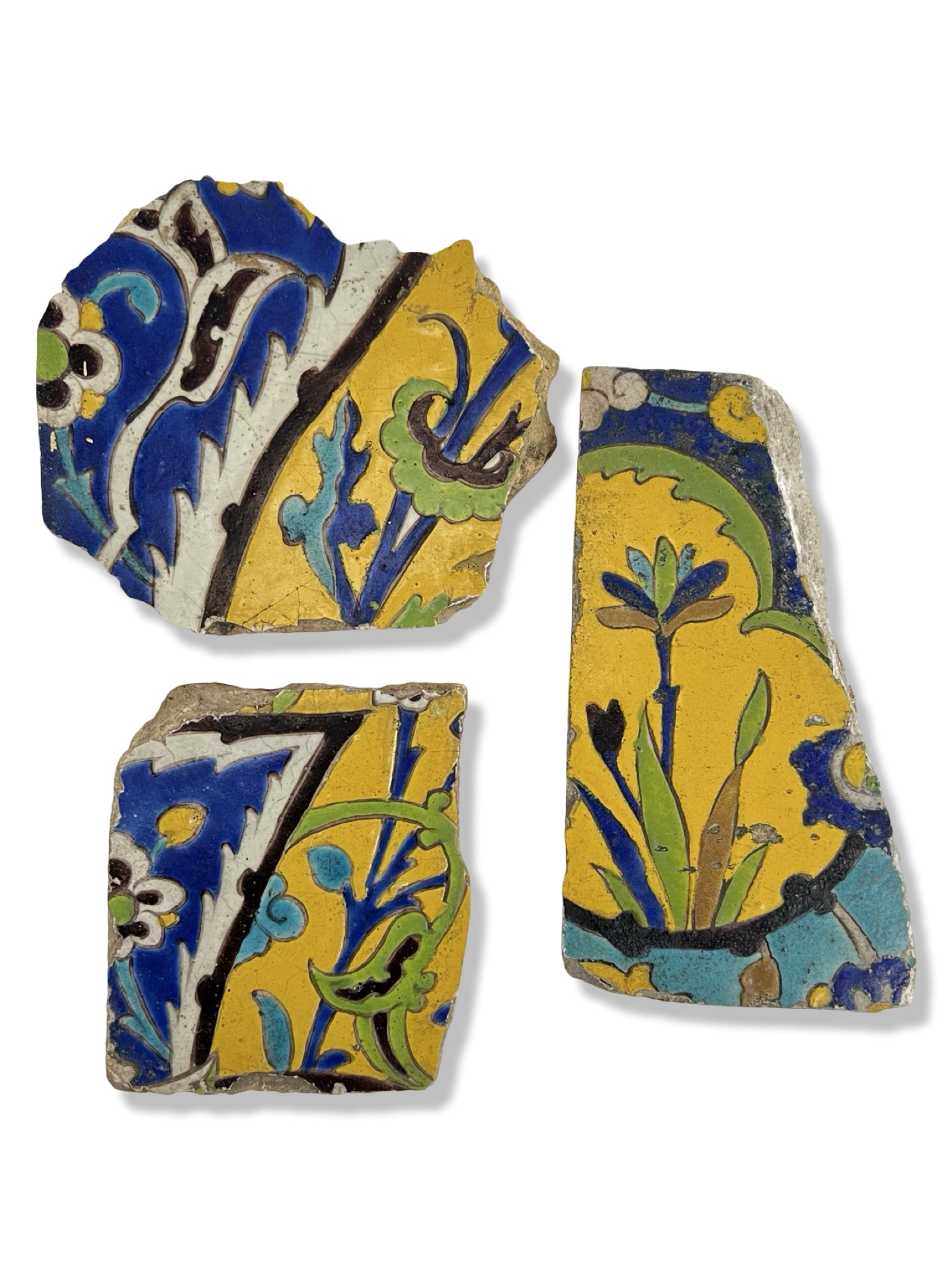
Lot 38: A TRIO OF SAFAVID CUERDA SECA POTTERY TILE FRAGMENTS, PERSIA, 17TH CENTURY
0 views
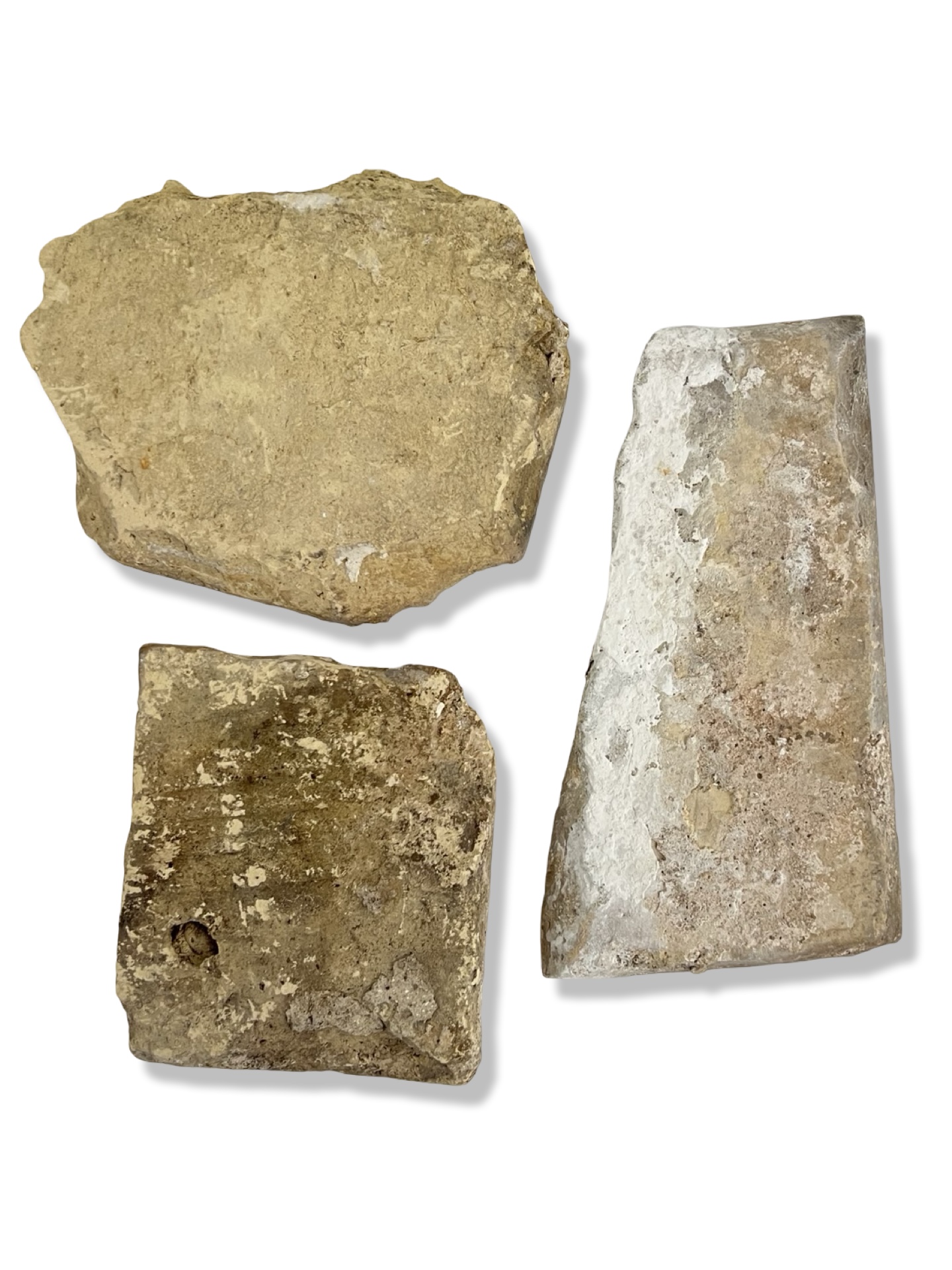
A trio of polychrome glazed tile fragments from the Safavid period, likely originating from Isfahan. Each piece is constructed from a thick, buff-coloured earthenware body, typical of architectural ceramics from the region. The decoration is executed using the cuerda seca (dry cord) technique, where a dark, greasy substance was used to outline the designs to prevent the different coloured glazes from mixing during firing. These dark Manganese outlines are clearly visible, defining a vibrant yellow-ground palette characteristic of 17th-century Safavid tilework. The fragments feature stylised floral motifs including lilies, blossoms, and foliate scrolls rendered in cobalt blue, turquoise, sage green, and white. The reverse sides and edges show a rough, unfinished texture with significant remnants of original mortar and plaster, particularly on the elongated rectangular fragment.
Largest: L: 23cm
Share this lot: