Lot 46: A RELIEF-MOLDED TERRACOTTA ARCHITECTURAL TILE, PERSIAN OR CENTRAL ASIAN, 12TH-14TH CENTURY
0 views
A RELIEF-MOLDED TERRACOTTA ARCHITECTURAL TILE, PERSIAN OR CENTRAL ASIAN, 12TH-14TH CENTURY
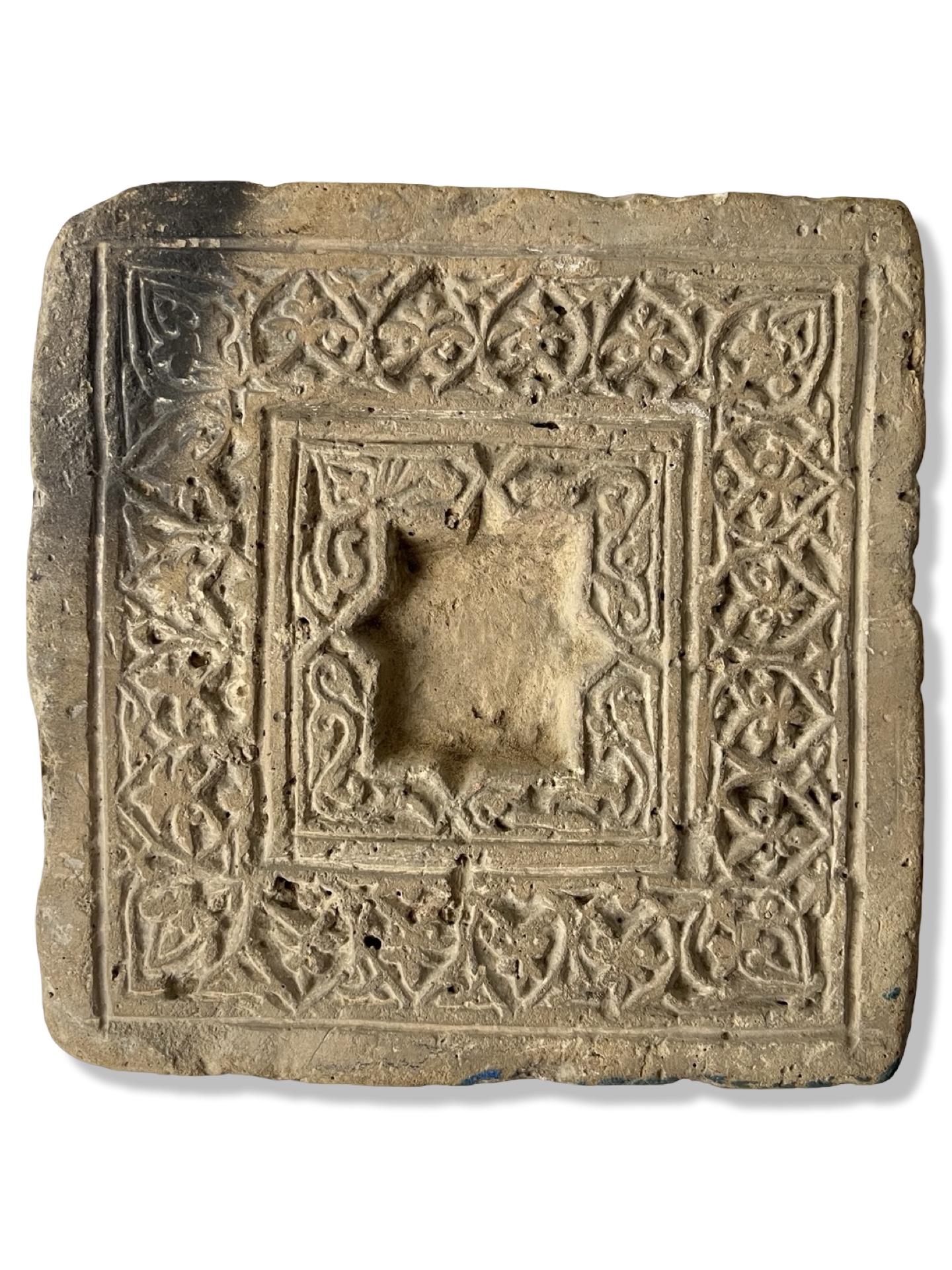
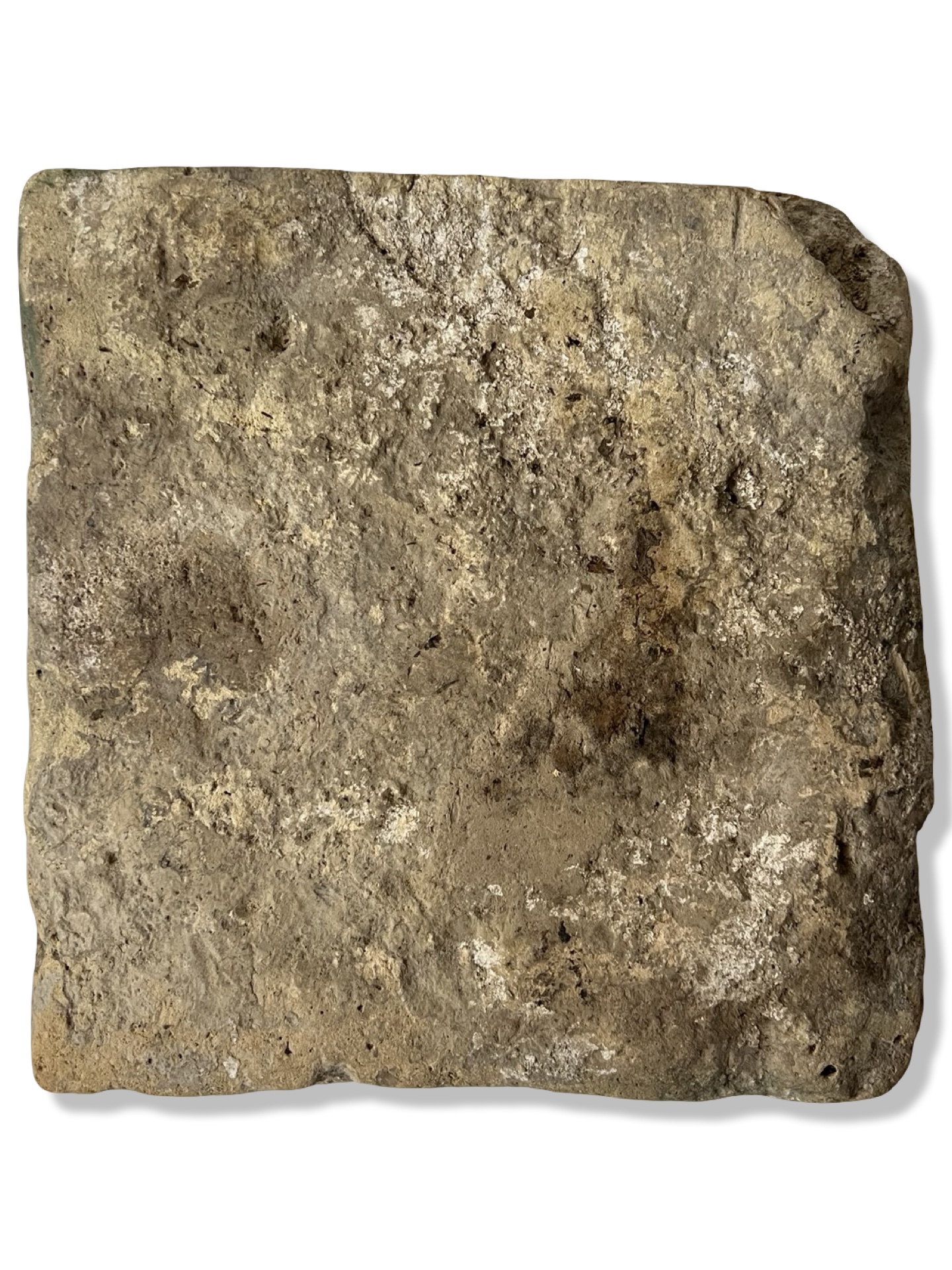
A square architectural relief panel or tile, likely of Persian or wider Islamic origin, dating from the medieval period, possibly Seljuk or Ilkhanid. The object is constructed from a coarse, buff-coloured earthenware or terracotta body. The face features a recessed central field in the form of an eight-pointed star, created by interlocking squares, which is left plain. This central element is framed by two concentric square borders. The inner border is decorated with a stylized foliate scroll, while the outer, wider border displays a repeating pattern of palmette and lobed leaf motifs in an arabesque scrolling vine. The reverse of the tile shows an irregular, hand-formed surface with a sandy texture and numerous inclusions. Traces of white lime mortar are present on the back, indicating the piece was originally set into an architectural wall. The surface is unglazed but exhibits significant mineral deposits and weathering; minute traces of blue pigment or glaze are visible within the deep recesses and along the bottom edge, suggesting a possible original monochrome glaze.
Share this lot: