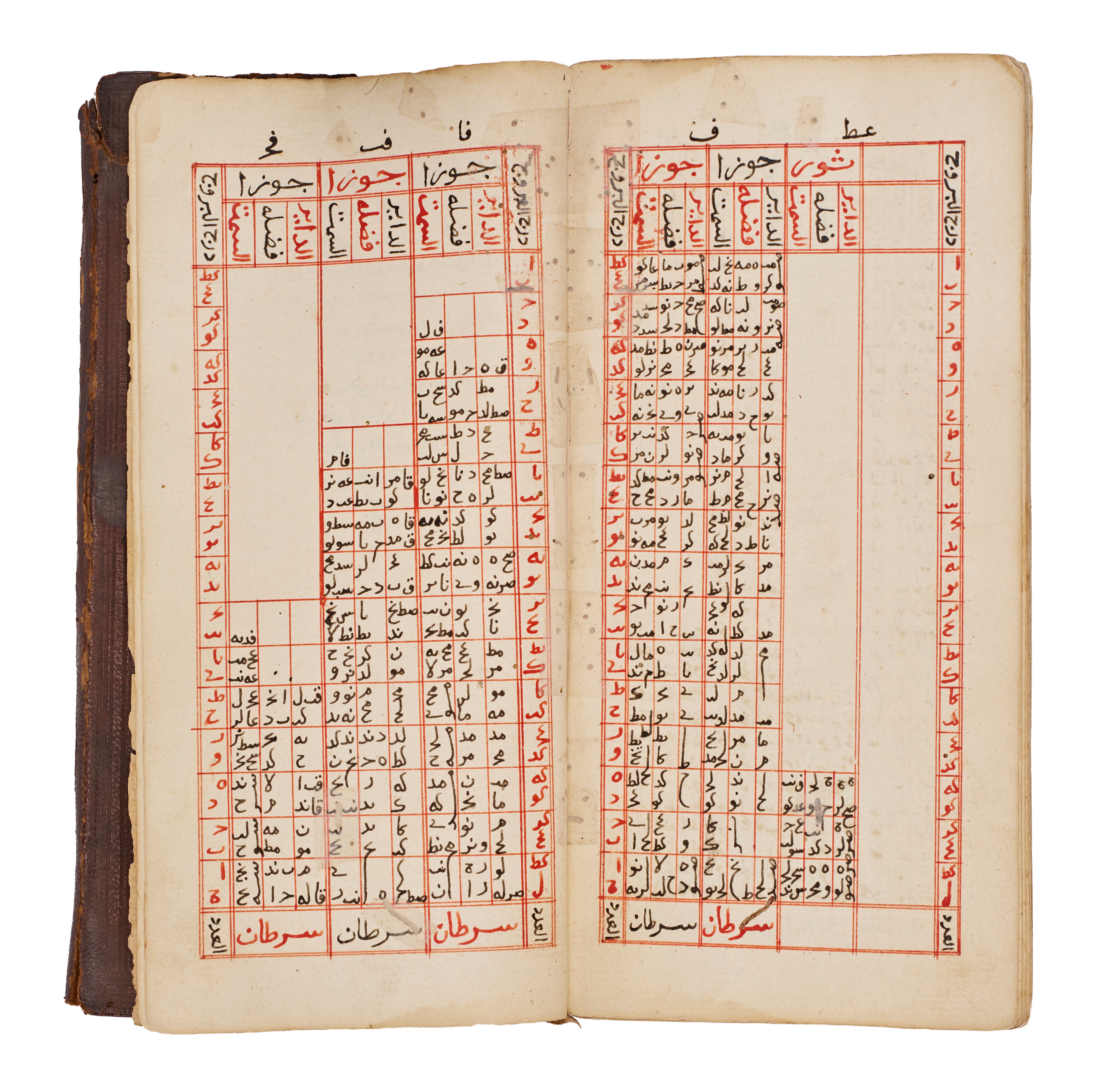
Lot 68: AN ARABIC ASTRONOMICAL AND HOROLOGICAL MANUSCRIPT, IRSHAD AL-HAYIR, DATED 990 AH - 1582 AD
1 view
AN ARABIC ASTRONOMICAL AND HOROLOGICAL MANUSCRIPT, IRSHAD AL-HAYIR, DATED 990 AH – 1582 AD
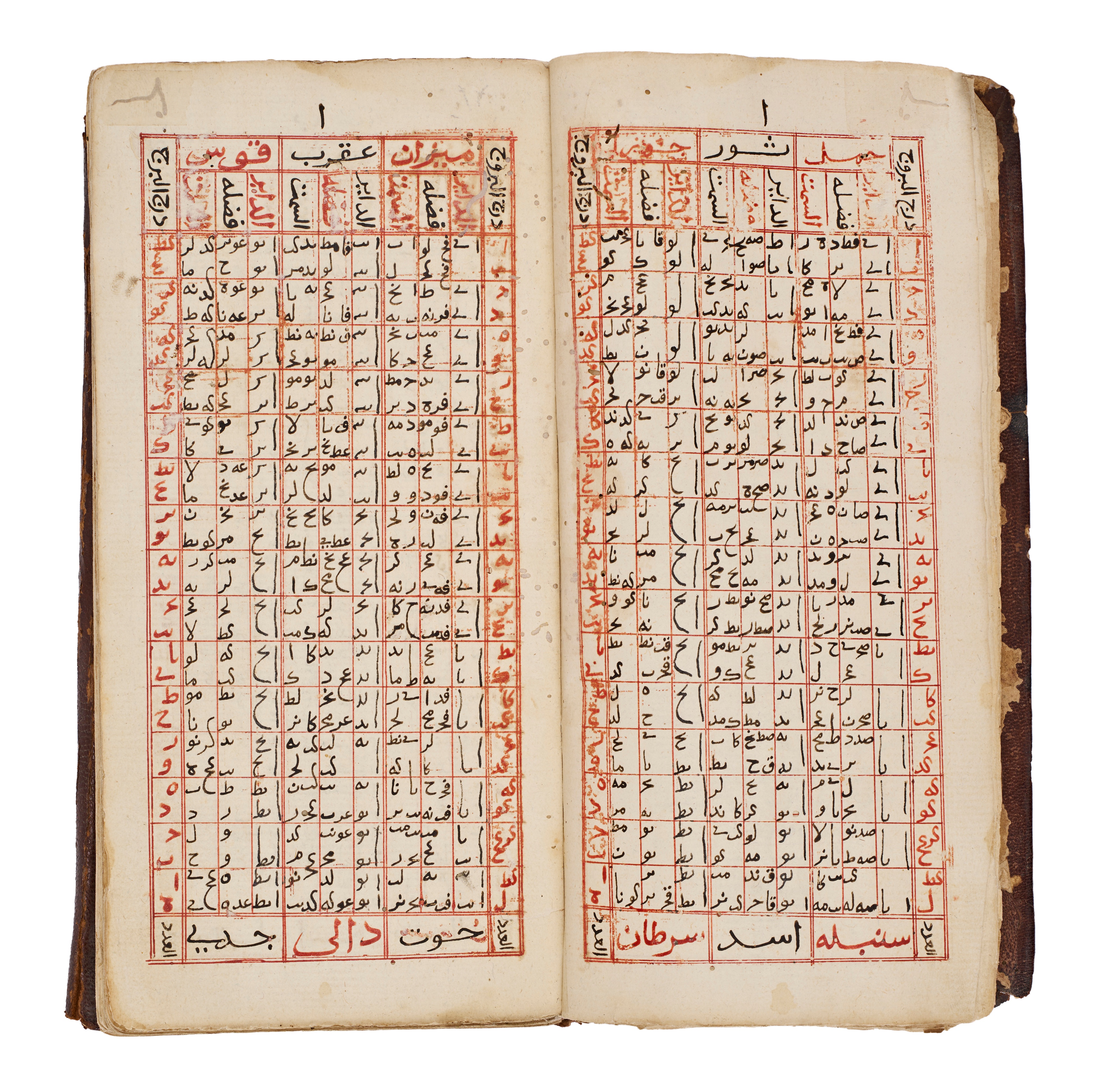
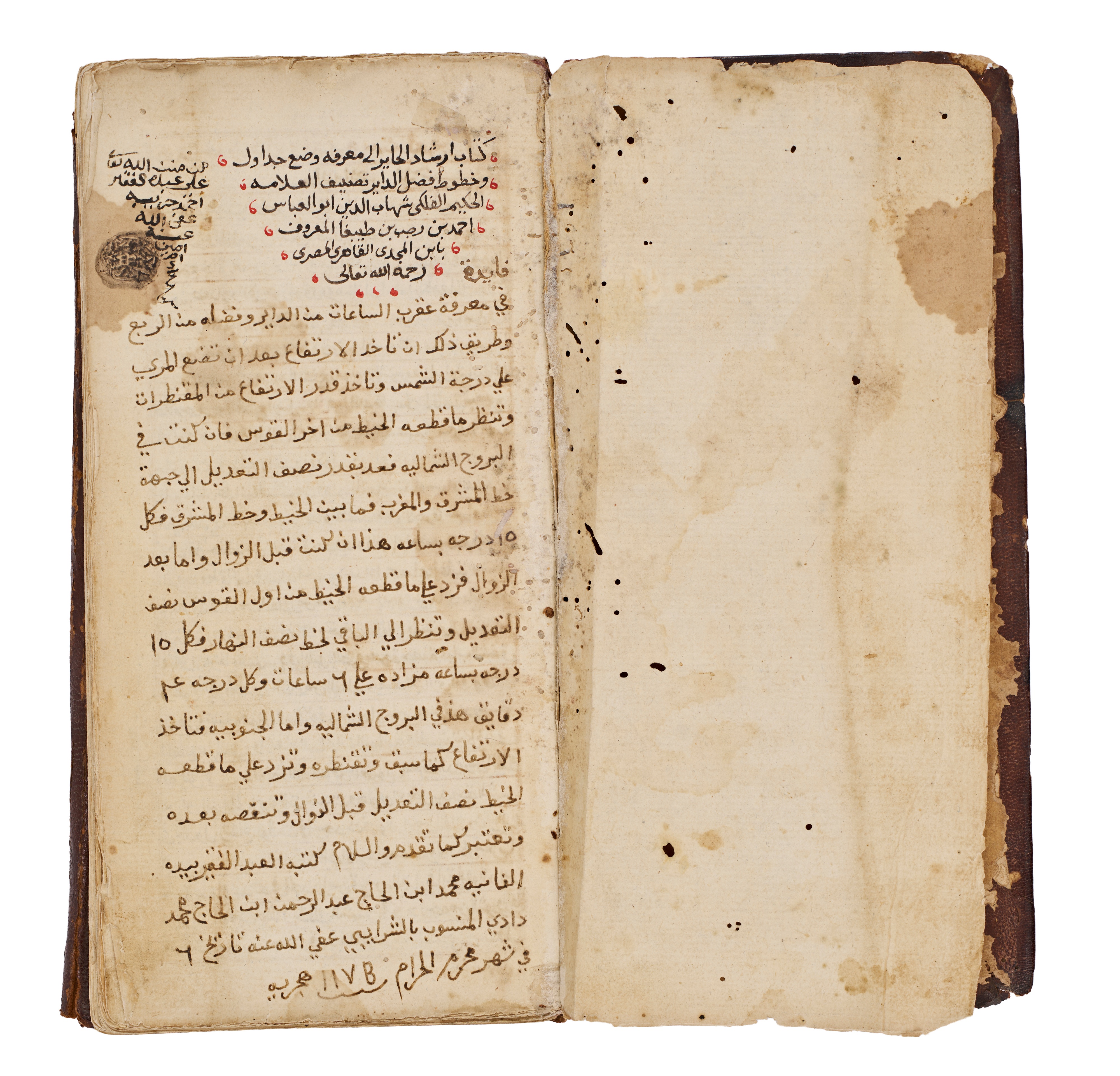
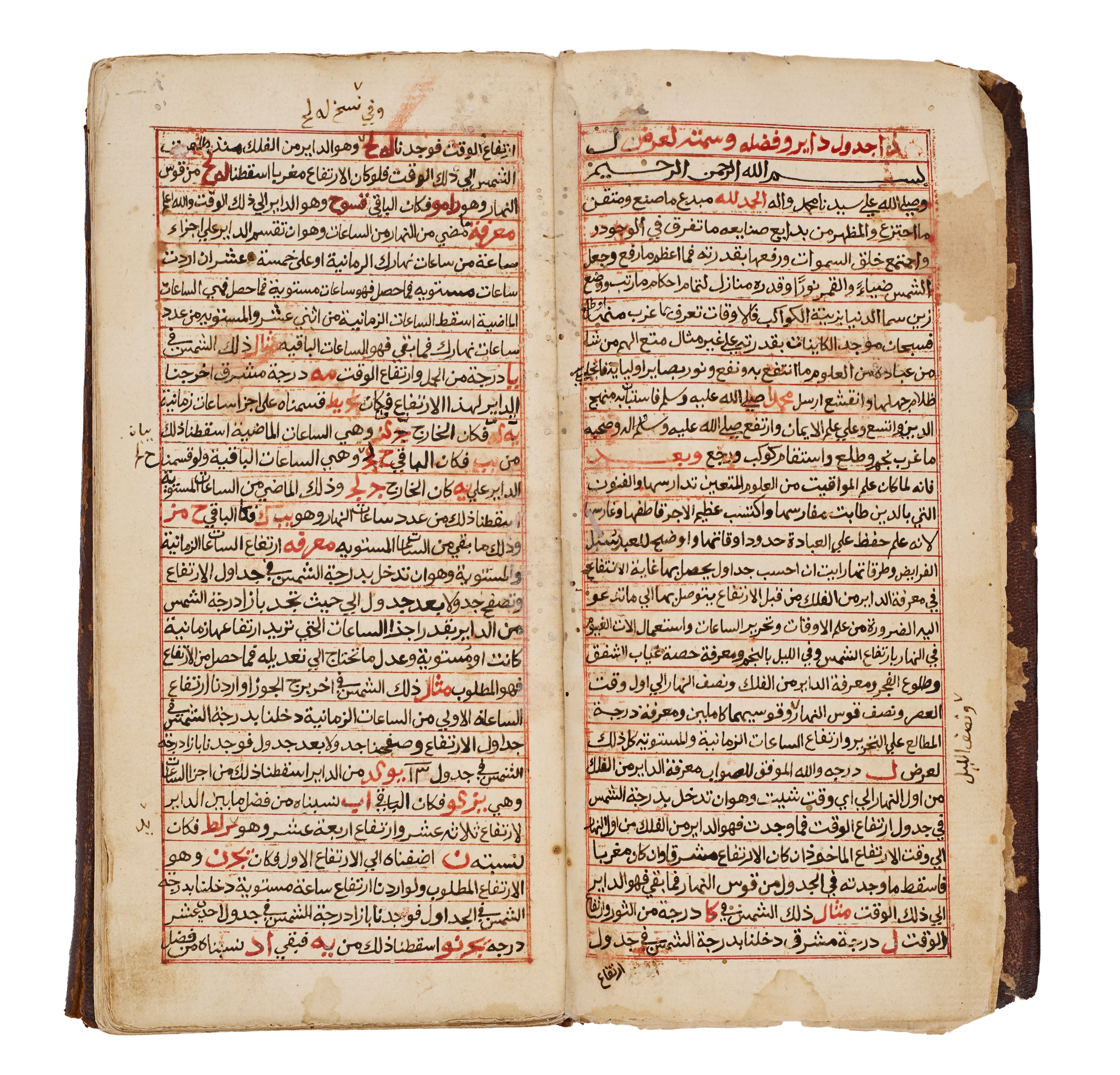
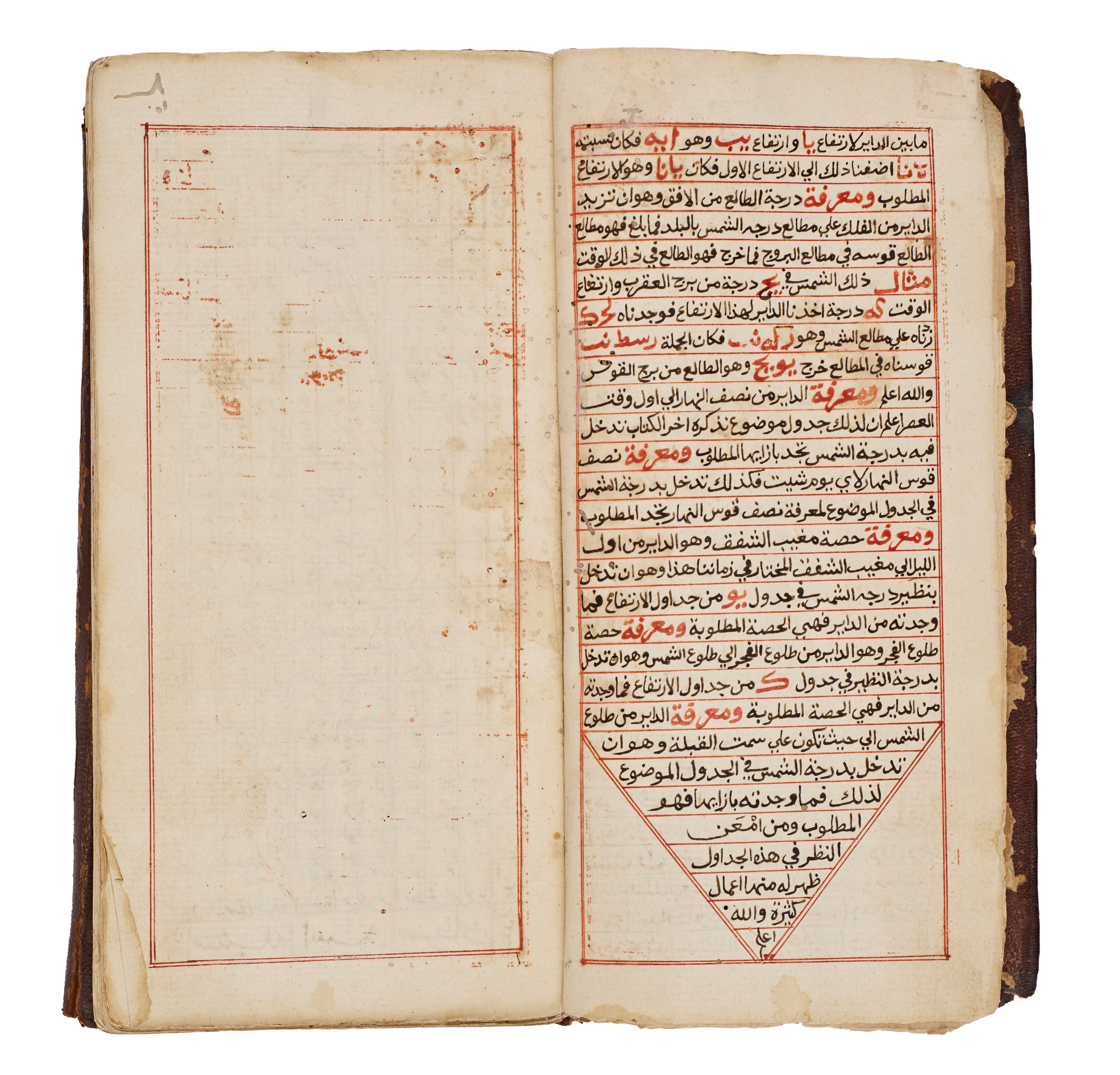
An Arabic manuscript concerning astronomical and horological tables, identified by internal text as a copy of Irshad al-Hayir by Ibn al-Majdi. The work is executed on light cream to buff-coloured handmade paper with visible laid lines. The text is written in a clear, functional Naskh script in black ink, with approximately 17 to 21 lines per page in the main text blocks. Red ink rubrication is used throughout for headings, keywords, table borders, and astronomical symbols. The volume contains extensive, meticulously ruled tables in red ink, featuring alphanumeric abjad notation and detailed astronomical data.
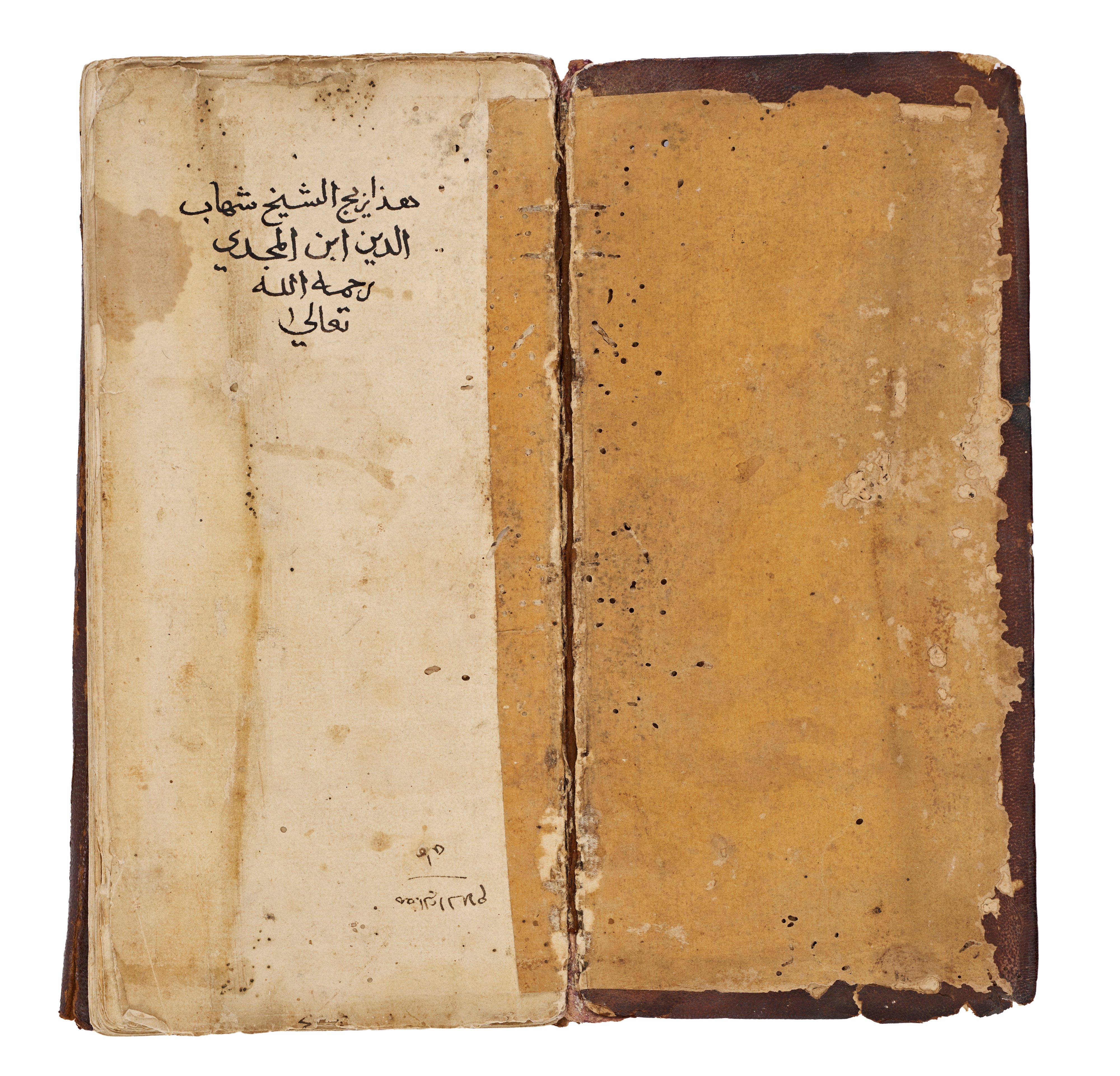
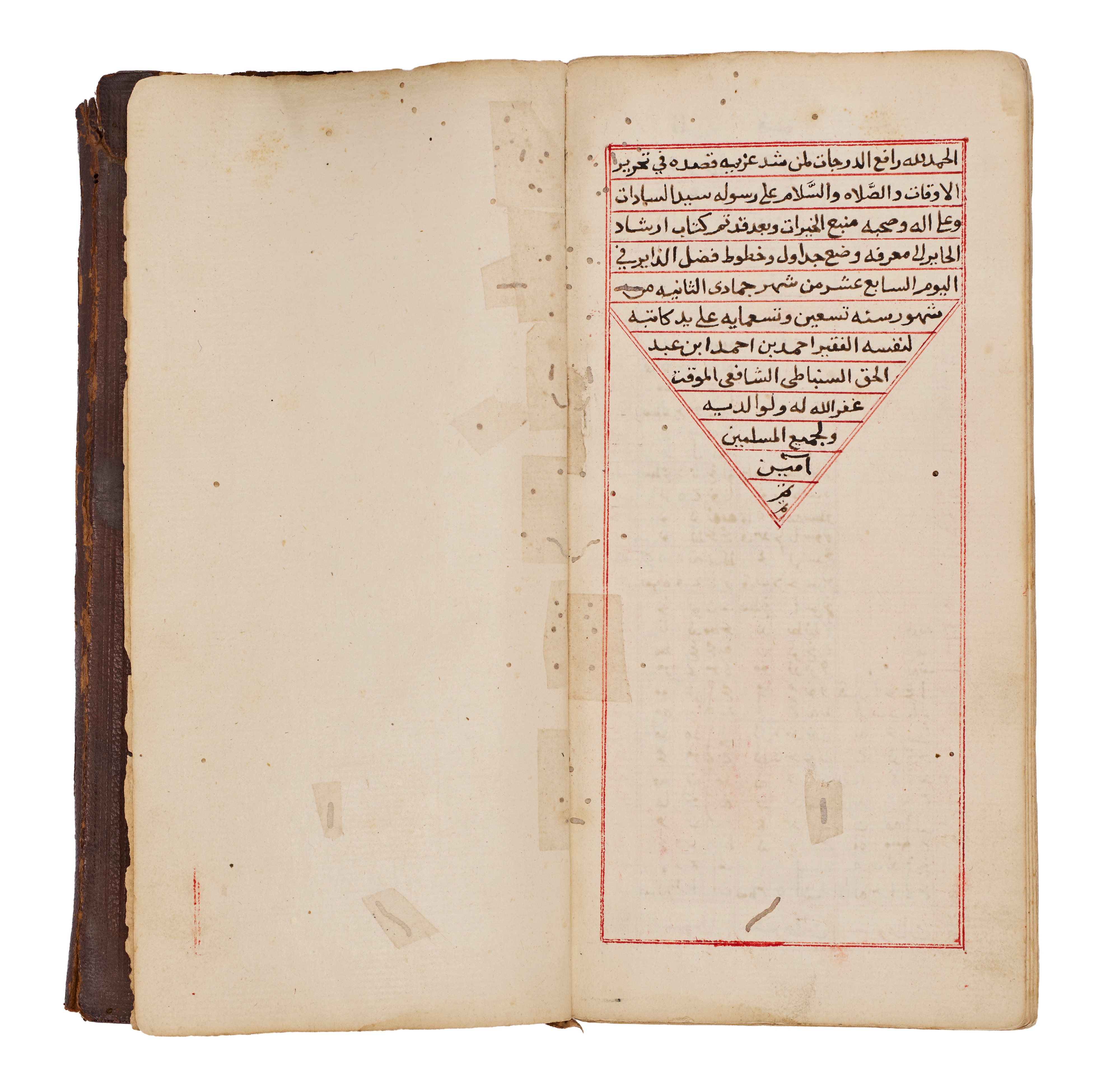
The manuscript includes several significant inscriptions. An opening ownership or title note on the third image reads: ‘هذا تاريخ الشيخ شهاب الدين ابن المجدي رحمه الله تعالى’ (This is the [work/history] of Sheikh Shihab al-Din ibn al-Majdi, may God have mercy on him). A secondary inscription on the same opening identifies the scribe as ‘Muhammad bin al-Hajj Abdul Rahman… al-Sharaibi’ and provides the date ‘شهر محرم الحرام ١١٧٥ هجرية’ (The month of Muharram, 1175 AH / approximately 1761 AD). A circular seal impression is present in the upper left margin of this page. The final page of text concludes in a triangular tapered layout (colophon) where the scribe identifies himself as ‘Ahmad bin Ahmad bin Abdul Haq al-Sinbati al-Shafi’i al-Muwaqqit’ and mentions the date ‘السابع عشر من شهر جمادى الثانية من شهور سنة تسعين وتسعمائة’ (17th of Jumada al-Thani, 990 AH / approximately 1582 AD). This earlier date likely refers to the original composition or an earlier model from which this 18th-century copy was derived.
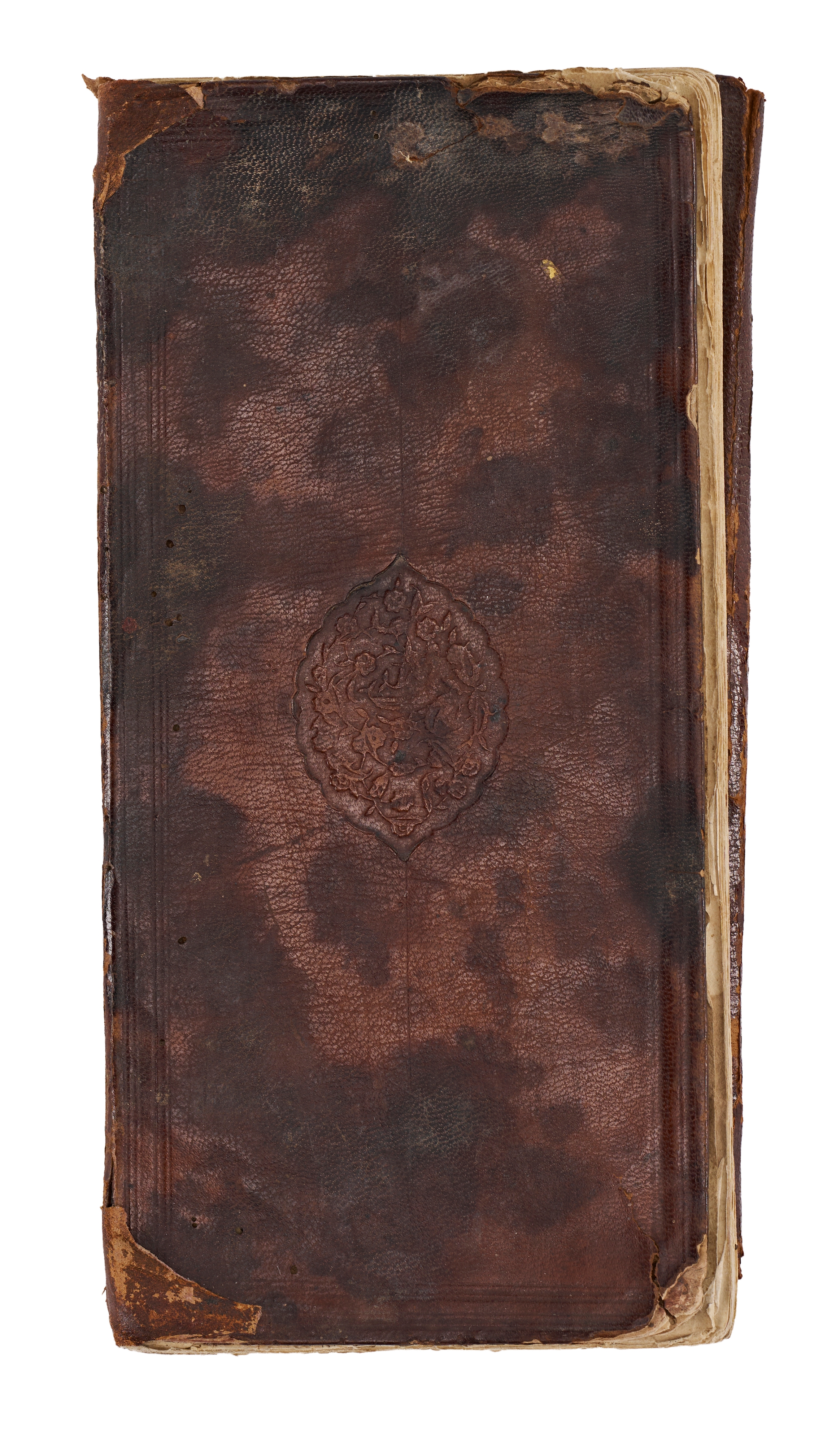
The volume is bound in full brown leather, likely goatskin, featuring a central mandorla-shaped stamped medallion decorated with floral and arabesque motifs. The interior doublures consist of plain paper. Minor paper repairs are visible, including small paper strips used to reinforce the gutters of several folios.
23 by 11cm
Share this lot: